
The Flatness Accelerator
Operational Technology networks were built for uptime, reliability, and deterministic performance. Security was rarely the primary design goal. Many OT environments still operate with flat network architectures, legacy protocols, and broad trust relationships between devices. Once an attacker gains initial access, that flatness becomes an accelerator.
Lateral movement is what happens after the initial breach. It is the quiet phase of an attack lifecycle. The adversary avoids triggering alarms by moving methodically from system to system using valid credentials, approved management tools, or open network paths. Instead of attacking a high value asset directly, they expand sideways until they reach PLCs, SCADA servers, engineering workstations, or historian databases. At that point, operational impact becomes possible.
"In a flat OT network, this movement can be almost frictionless."
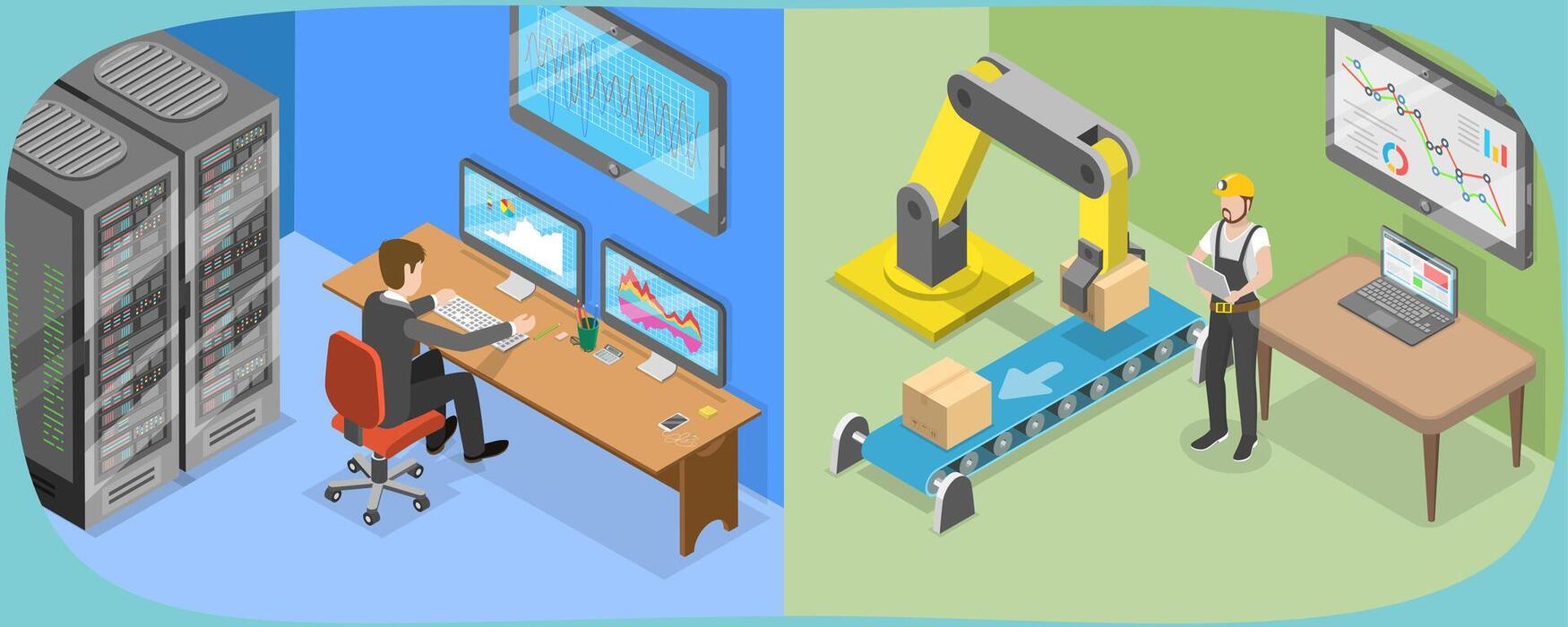
The Reality of Modern OT Exposure
OT networks are no longer isolated islands. Remote maintenance, predictive analytics, cloud dashboards, vendor integrations, and centralized monitoring have blurred the boundary between IT and OT. This convergence increases operational efficiency, but it also introduces new pivot paths.
The common misconception is that an attacker must breach the control system directly. In reality, most intrusions begin in IT through phishing, credential compromise, or exposed services. Once inside corporate infrastructure, attackers look for trust relationships that bridge into OT. A poorly configured firewall rule, a dual homed engineering laptop, or an improperly segmented data historian can become the entry point.
Flatness turns a single foothold into systemic exposure.
Why Flat OT Networks Amplify Risk
Many industrial environments were designed under the assumption that internal systems were trusted. Segmentation was minimal. Authentication within industrial protocols was often nonexistent. Devices communicated freely because the priority was operational continuity.
That architecture creates structural weaknesses that compound risk over time:
Broad East-West Visibility
Allows attackers to enumerate assets, identify critical controllers, and map trust relationships without encountering meaningful barriers.
Shared Credentials
Common in OT due to operational convenience. A single maintenance password reused across tools becomes a master key if exposed.
Implicit Trust
Systems often have unnecessary open ports or wide access control rules, creating trivial pivot points for adversaries.
Visibility Asymmetry
Attackers exploit the imbalance by entering through monitored IT side and operating within the less visible OT environment.
The Technical Mechanics of Lateral Movement in OT
The techniques used are often straightforward, which makes them dangerous.
Credential harvesting from memory or configuration files remains a primary method. Many engineering workstations cache credentials for convenience. If compromised, those credentials unlock additional systems.
Remote protocols such as RDP, SMB, SSH, and vendor specific services are leveraged for pivoting. Attackers do not need malware when legitimate tools provide authenticated access.
Dual homed systems are particularly risky. An engineering laptop connected to both corporate and control networks becomes a bridge that bypasses segmentation entirely.
In some cases, attackers exploit industrial protocols themselves. Weak or unauthenticated protocols allow command replay or unauthorized interaction with controllers. Even if direct process manipulation is not the goal, gaining visibility into process logic provides strategic leverage.
The Attacker's Playbook
Why Detection in OT Is Fundamentally Different
Detection strategies that work in IT environments often fail in OT. Active vulnerability scanning may disrupt fragile controllers. Aggressive endpoint agents may not be supported by legacy operating systems. Logging is inconsistent across devices. Many PLCs provide limited forensic visibility.
Normal operational traffic also complicates detection. Engineering updates, vendor maintenance sessions, and legitimate remote access events can resemble attacker behavior. Without strong behavioral baselining, distinguishing malicious pivoting from authorized maintenance becomes guesswork.
This creates a dangerous blind spot. An attacker can remain inside an OT environment for extended periods, gradually expanding access without triggering traditional alarms.
Containment Through Architectural Discipline
There is no single control that eliminates lateral movement risk. Containment requires layered architectural decisions.
Advanced Microsegmentation
Segmentation must evolve beyond basic VLAN separation. True microsegmentation enforces communication policies at the device level. Each asset should only communicate with explicitly approved systems.
Identity-Based Security
Identity must replace implicit trust. Authentication should be individual and auditable. Shared accounts should be eliminated wherever possible, and remote access should require strong multi-factor controls.
Deliberate IT/OT Boundaries
IT/OT boundaries must be engineered deliberately. Dedicated jump hosts and strict firewall policies reduce pivot opportunities. Systems that bridge zones should be hardened and monitored.
Passive Network Monitoring
Critical in OT environments. Instead of intrusive scanning, analyze traffic flows and behavioral anomalies. Unexpected east-west connections become high-fidelity indicators of lateral movement.
Compensating Controls
Legacy systems require compensating controls. If a device cannot be patched, isolate it aggressively. Limit network exposure and treat it as inherently high risk.
From Prevention to Resilience
The uncomfortable truth is that prevention alone is not enough. Phishing will succeed somewhere. Credentials will leak. A vendor laptop will eventually be compromised.
The strategic objective is not to assume perfect defense. It is to design networks where compromise does not equal catastrophe.
Flat networks favor attackers because they remove friction. Segmented, identity aware, and monitored environments introduce friction. They slow expansion. They reduce blast radius. They provide detection opportunities before operational impact occurs.
In OT, security is inseparable from operational resilience. Lateral movement is the mechanism that turns small breaches into systemic failures. Containing it is not simply a cybersecurity exercise. It is a business continuity imperative.
Attack Scenario: Flat OT Network
Consider a mid sized manufacturing company. The corporate IT environment includes email, ERP, and cloud analytics. The OT environment controls robotic assembly lines through PLCs connected to SCADA servers and engineering workstations. The two environments are separated by a firewall, but several exceptions exist for data reporting and remote vendor support.
The attack begins in IT.
A finance employee clicks a convincing phishing email. Credentials are harvested. The attacker gains access to the corporate network through a VPN session using legitimate credentials. Nothing unusual is flagged. The login appears valid.
Inside IT, the attacker performs quiet reconnaissance. They enumerate Active Directory, identify file shares, and search for documentation related to production systems. They discover that a data historian server has dual connectivity. It pulls data from PLCs in OT and pushes reports into the corporate analytics platform.
The firewall rule allowing this communication is broad. It trusts traffic originating from the historian server. The attacker compromises the historian through credential reuse. The same service account password is used in both environments. Once inside the historian, they are effectively inside OT.
Now lateral movement accelerates.
From the historian, they identify engineering workstations communicating with multiple PLCs. The network is flat. There are no internal restrictions preventing east west communication between control assets.
Using harvested credentials and built in remote management tools, they access an engineering workstation. From there, they gain visibility into PLC configurations and process logic. They do not immediately alter anything. Instead, they establish persistence.
Over the next several days, they map dependencies between production lines. They identify which controllers regulate critical operations and which safety systems are logically separated but not network isolated.
At this stage, the attacker has options. They could deploy ransomware targeting both IT and OT systems simultaneously, maximizing disruption. They could manipulate process parameters subtly, causing quality degradation rather than immediate shutdown. They could exfiltrate intellectual property embedded in control logic. Or they could simply wait, maintaining access for future leverage.
Critical Failure Analysis:
All of this became possible not because the initial phishing attack was sophisticated, but because the OT network was flat and implicitly trusted internal traffic.
What Would Have Contained This Scenario?
The lesson is uncomfortable but clear. The breach was not catastrophic at the moment of phishing. It became catastrophic during lateral movement.
- If microsegmentation had restricted the historian to only approved PLC communications, pivoting into engineering workstations would have failed.
- If service accounts had unique credentials per zone, reuse would not have bridged IT and OT.
- If east west traffic inside OT were monitored and baselined, unusual authentication attempts from the historian to engineering systems would have triggered investigation.
- If dual homed systems were hardened and treated as high risk assets, the pivot path would have been far narrower.
The Strategic Takeaway
In OT environments, initial compromise is often inevitable. Flat networks turn inevitability into disaster. Segmented, identity aware, and monitored architectures turn inevitability into containment.
Lateral movement is the multiplier. Remove the multiplier, and you shrink the blast radius.
From a security architecture perspective, the question is not whether someone can get in. It is whether they can move once they do. And in flat OT networks, movement is everything.
Secure Your Operational Continuity
Don't let a "flat" network be your operational single point of failure. Convert your infrastructure into a resilient, identity-aware fortress.
Was this article helpful?
Last updated: February 2026
Article ID: KB-OT-001