
Why This Technology Choice Defines Your Warehouse Operations
Barcode or RFID? It seems like a simple choice, but it's not. The decision affects inventory accuracy, operational speed, labor costs, and scalability. The wrong choice leads to frustration and expense. The right choice becomes invisible — your operations simply work.
The reality is nuanced:
- Neither is universally superior.
- Each excels in different environments and scenarios.
- Many operations benefit from using both together.
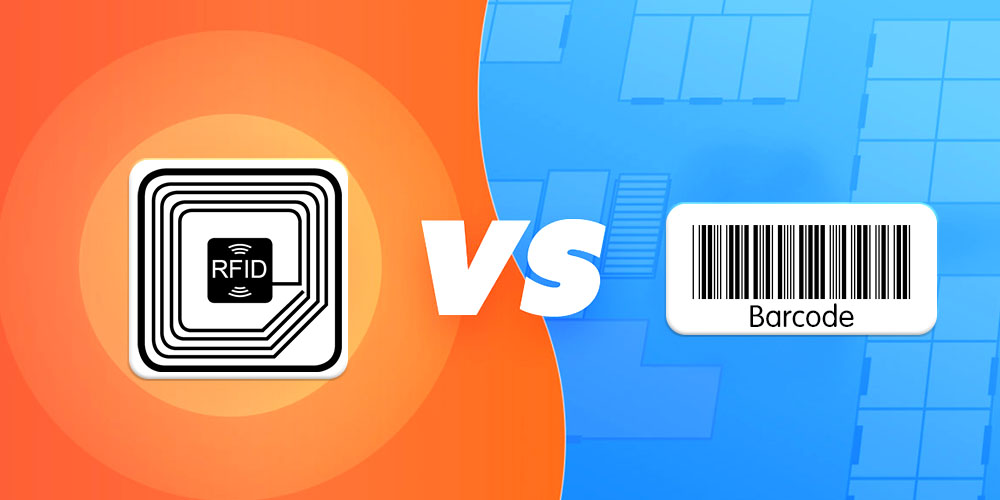
At QueryTel, we've helped dozens of businesses evaluate, select, and implement both barcode and RFID systems. This guide distills that experience into practical guidance to help you make the right choice for your operation.
Understanding Barcode Technology
Barcodes are optical technologies that store data in visual patterns. They've been industry standard for decades because they're proven, affordable, and reliable when implemented correctly.
How Barcodes Work
A barcode scanner reads visual patterns on a label. The scanner interprets those patterns and transmits the encoded data (typically a product ID or serial number) to your system. This requires direct line-of-sight — the scanner must see the barcode clearly.
Key Characteristics of Barcodes
Single Data Read
One barcode = one scan required
Low Cost
Minimal per-unit expense
Line-of-Sight Required
Scanner must see the barcode clearly
Manual Labor Required
Worker must position scanner for each item
Instant Results
Data available immediately upon scan
Mature Ecosystem
Widely adopted, well-supported technology
Barcode Strengths
- Proven reliability: Decades of successful deployment in every industry.
- Minimal infrastructure cost: Scanner and labels are inexpensive.
- Works in most environments: Resistant to dust, heat, cold (with proper label selection).
- No privacy concerns: Simply reads a number; no unique identification of items.
Barcode Limitations
- Labor intensive: Each item requires manual scanning.
- Single-item reading: Can't scan multiple items simultaneously.
- Line-of-sight requirement: Doesn't work if label is obscured or facing the wrong direction.
- Scanning errors: Fatigue, poor positioning, or label damage causes missed reads.
- No real-time tracking: Must scan to update location; gaps create inventory uncertainty.
Understanding RFID Technology
RFID (Radio-Frequency Identification) uses radio waves to read data wirelessly. A tag contains a microchip and antenna. A reader sends radio signals that activate the tag and retrieve its data — without line-of-sight and often at a distance.
How RFID Works
An RFID reader emits radio waves in a defined frequency range. When an RFID tag enters that field, the tag's antenna receives the signal, powering the microchip momentarily. The chip transmits back its stored data. The reader captures this signal and sends the data to your system. This works through cardboard, plastic, and light materials — even if the tag isn't directly visible.
Key Characteristics of RFID
Multiple Simultaneous Reads
Multiple tags read at once
No Line-of-Sight
Reads through materials and obstacles
Reusable Tags
Tags survive many read cycles
Durable Form Factors
Tags, stickers, wristbands, cases
Writable Tags (Optional)
Some tags can be updated on-the-fly
Real-Time Tracking
Continuous presence detection
RFID Strengths
- Dramatically reduced labor: No manual positioning required; batch reading of many items.
- Higher accuracy: Eliminates scanning errors caused by positioning, fatigue, or obscured labels.
- Real-time inventory visibility: Enables continuous tracking and immediate location awareness.
- Works through obstacles: No requirement for line-of-sight; reads through cardboard and light packaging.
- Reusable tags: Lower cost-per-read over product lifecycle; well-suited for returnable containers.
RFID Limitations
- Higher capital costs: Readers, tags, and infrastructure require significant upfront investment.
- Complex environment setup: Reader placement, antenna tuning, and interference mitigation require expertise.
- Metal and liquid interference: Radio waves are absorbed or reflected by metal and conductive liquids.
- Privacy considerations: Unique tag IDs can raise data privacy and tracking concerns.
- Integration complexity: Requires robust system integration and data management infrastructure.
- Longer implementation timeline: Proper deployment requires planning, testing, and validation.
Head-to-Head Comparison
Here's how barcode and RFID stack up across the dimensions that matter most to warehouse operations:
| Factor | Barcode | RFID |
|---|---|---|
| Upfront Cost | Very Low | High |
| Per-Unit Cost | Cents | $0.50-$5+ |
| Labor Requirements | High (manual scans) | Low (batch reads) |
| Line-of-Sight | Required | Not Required |
| Simultaneous Reads | One at a time | Multiple (dozens+) |
| Accuracy (%) * | 95-98% | 98-99.9% |
| Real-Time Tracking | No (point scans) | Yes (continuous) |
| Environmental Robustness | Good (with right labels) | Fair (sensitive to metal) |
| Implementation Time | Weeks | Months |
| Complexity | Low | High |
* Assumes properly applied labels and trained personnel for barcode; proper RFID system tuning for RFID
Cost Analysis: Upfront vs. Long-Term
Cost-benefit analysis is essential, but it's not just about upfront investment. Total cost of ownership tells the real story.
Barcode Cost Structure
RFID Cost Structure
The Long-Term Picture
Barcode systems have low ongoing costs (labels and minimal maintenance) but high labor expenses. RFID systems have higher infrastructure costs but dramatically reduce labor.
Breakeven Analysis
RFID typically becomes cost-justified after 2-4 years in high-volume operations through labor savings.
For operations handling thousands of items daily, RFID's labor reduction quickly offsets higher initial costs.
Use Cases & Best Applications
The "right" technology depends entirely on your operation's specific characteristics. Here's where each excels:
Barcode Excels In:
✓ Retail & Ecommerce Fulfillment
High product variety, one-off shipments, established barcode infrastructure. Cost per scan is negligible given scale.
✓ Small to Medium Warehouses
Limited capital budgets, moderate volume operations where labor cost is acceptable vs. RFID's upfront investment.
✓ High-Variety, Low-Velocity Items
When item diversity is high but individual volumes are low, barcode's per-unit cost advantage matters.
✓ Operations in Metal-Heavy Environments
Metal shelving, steel containers, machinery-heavy areas where RFID interference is problematic.
✓ Product-Level Tracking (Not Container Level)
When you need detailed item-by-item accuracy for individual SKUs within a shipment.
RFID Excels In:
✓ Large, High-Volume Operations
Distribution centers, manufacturing facilities, and logistics hubs where labor cost reduction provides rapid ROI.
✓ Returnable Container/Pallet Tracking
Reusable assets that move through multiple facilities justify tag cost; RFID tags survive many read cycles.
✓ Real-Time Inventory Visibility
Operations requiring continuous asset location tracking throughout the facility without manual scanning.
✓ Automated Receiving & Shipping
Gateway readers that automatically capture full pallet/container contents without human intervention.
✓ High-Accuracy Operations
Pharmaceuticals, hazmat, regulated industries where inventory accuracy is non-negotiable.
✓ Labor Cost Pressure
Tight labor markets or wage-sensitive operations where automation reduces headcount dependency.
Hybrid Approaches: The Best of Both Worlds
Many sophisticated operations don't choose one. They use both strategically.
Hybrid deployments leverage each technology's strengths while mitigating weaknesses.
Common Hybrid Patterns
RFID for Pallets, Barcodes for Items
Track pallets and containers via RFID at receiving/shipping gates for speed and accuracy. Track individual SKUs within the warehouse via barcode. Fastest overall throughput with cost control.
RFID for High-Volume Areas, Barcodes for Precision Areas
Use RFID for bulk receiving, storage, and shipping operations. Use barcodes for detailed picking, quality control, and product-level verification where precision matters most.
RFID Tagging + Barcode Printing
Apply both RFID tags and barcodes to items. RFID provides automated gateway reading; barcodes serve as fallback for manual verification and historical compatibility with existing systems.
Phased Implementation
Start with barcodes in mature operations, implement RFID incrementally as capital becomes available. Hybrid system runs in parallel during transition period.
Implementation Strategy: Choosing the Right Path
Making the decision requires honest assessment of your operation and priorities.
Critical Questions to Ask
What is your daily transaction volume?
High volume (thousands+) favors RFID. Low volume favors barcode.
What's your capital budget?
Limited budget ($30K) suggests barcode. Substantial budget ($100K+) enables RFID consideration.
What's your labor cost pressure?
High labor costs or tight labor markets strengthen the RFID case. Abundant low-cost labor favors barcode.
What accuracy level do you need?
Regulated/high-accuracy requirements favor RFID. Standard accuracy works with barcode.
What assets are being tracked?
Returnable containers favor RFID. One-off items favor barcode.
What's your facility environment?
Metal-heavy or interference-prone environments challenge RFID. Clean, standard warehouses work with both.
Do you need real-time visibility?
Yes, strongly favors RFID. Point-in-time accuracy is sufficient with barcode.
The QueryTel Approach
We align technology with your goals.
Assess Your Operation
We conduct a thorough analysis of volume, labor, accuracy requirements, and environment.
Calculate ROI for Each Option
We model costs, labor savings, and operational benefits over 3-5 years for barcode, RFID, and hybrid approaches.
Recommend the Best Fit
We make a clear recommendation based on your priorities, budget, and operational goals.
Manage Implementation
We handle the full deployment, ensuring your systems are configured correctly and your team is trained.
The right technology isn't the newest or most sophisticated. It's the one that solves your specific challenges within your specific budget.
Need Help Choosing?
Let our experts evaluate your operation and recommend the technology stack that delivers maximum ROI for your specific situation.
Get a ConsultationWas this article helpful?
Last updated: January 2026
Article ID: KB-RFID-BARCODE-001