
Why Businesses Need a Firewall
The modern internet is a constant battlefield. Attackers scan every reachable network, every hour, searching for weaknesses. They don’t target businesses based on size, revenue, or industry. They target everything. The only question is whether your environment has a way to stop them.
In the time it takes you to read this paragraph, thousands of automated bots have likely scanned your public-facing IP addresses.
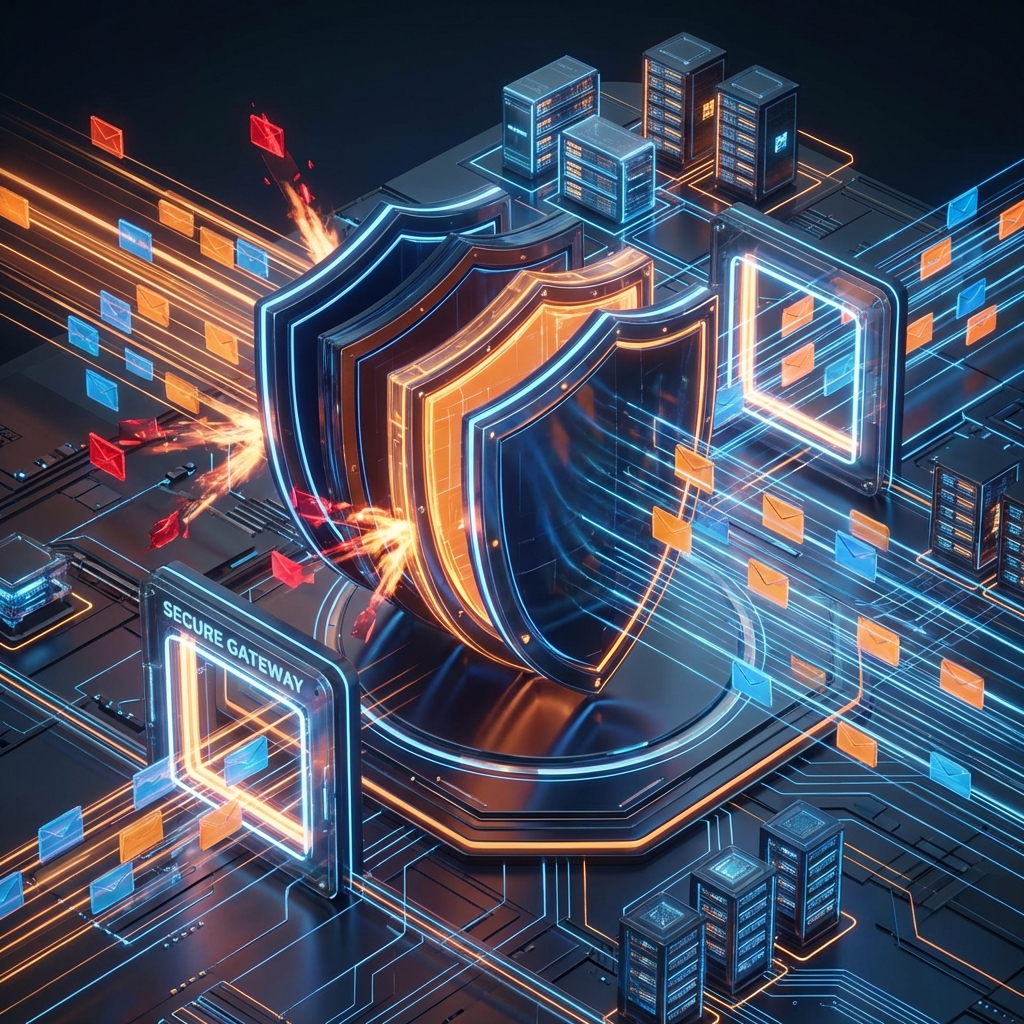
A firewall is that control point. It sits between your internal systems and the outside world, inspecting, filtering, and regulating every connection. Without it, your business is exposed to automated attacks, unauthorized access, data leaks, and network compromise.
At QueryTel, we treat firewalls as strategic security devices, not simple network accessories. When deployed correctly, a firewall becomes the architectural backbone of your cybersecurity posture.
Technical Deep Dive: How Firewalls Work
To understand a firewall, you must understand the flow of data. Data travels through a network in "packets." Each packet contains a header (addressing info) and a payload (the actual data). A firewall examines these packets against a set of predefined security rules.
The OSI Model Perspective
Security happens at different layers of the Open Systems Interconnection (OSI) model. Traditional firewalls work at Layers 3 and 4, while modern ones reach Layer 7.
Layer 7
Application
Filters based on specific software behavior and data patterns.
Layer 4
Transport
Manages ports, protocols, and communication handshakes.
Layer 3
Network
Foundational routing and IP-based traffic filtering.
When a packet arrives, the firewall performs a Stateful Inspection. This isn't just checking if a packet is allowed; it's checking if the packet is part of an existing, valid conversation. If an external server tries to send data that your internal computer didn't request, the firewall drops it instantly.
Different Types of Firewalls for Different Needs
Not all firewalls are created equal. Depending on your business scale, you might utilize one or a combination of the following:
Packet-Filtering
The foundational layer acting on IP addresses and ports to provide fast, efficient filtering for high-speed network demands.
Stateful Inspection
The industry standard for tracking active conversations, ensuring all returning traffic is tied to a legitimate request.
Proxy Gateways
Provides ultimate isolation by hiding internal IP addresses and performing deep content filtering through an intermediary.
The Firewall as Your Digital Gatekeeper
Imagine your network as a building. A firewall is the front door, the security guard, and the visitor log all at once. It decides who enters, who leaves, and what happens if someone tries to force their way in.
A firewall serves as your digital gatekeeper—inspecting every incoming packet, evaluating every connection request, and logging every action to maintain an impenetrable network perimeter.
Without a firewall enforcing these boundaries, your systems operate with open access. Attackers love open access. It eliminates the need for sophisticated exploits. They walk in. QueryTel ensures the door stays locked, monitored, and intelligently controlled.
The Evolution: Next-Generation Firewalls (NGFW)
Yesterday's firewalls (Layer 3/4) were simple port-blockers. Modern threats require Next-Generation Firewalls (NGFW). These devices operate at the Application Layer (Layer 7), providing deep packet inspection and intelligent traffic analysis.
Application Awareness
Identifies software behavior rather than just broad connection ports.
Deep Packet Inspection
Analyzes actual data payloads to detect hidden malware or commands.
Intrusion Prevention
Blocks known exploits and zero-day attacks through behavior analysis.
User-ID Intelligence
Ties security policies to individuals or teams rather than static machines.
Blocking Threats Before They Reach Your Systems
Firewalls stop threats at the perimeter, long before they have the chance to infect a device, compromise a user, or spread laterally. They detect:
Firewalls stop threats at the perimeter—long before they can compromise users or spread laterally. These systems are engineered to detect malicious scanning, prevent unauthorized access attempts, block vulnerability exploits, and flag suspicious communication patterns instantly.
Firewalls use both signature-based analysis and behavioral intelligence to differentiate legitimate activity from threats. And unlike human monitoring, they operate continuously — twenty-four hours a day, every day. Your business may not be awake, but attackers always are.
Preventing Lateral Movement Inside the Network
Many businesses mistakenly believe a firewall only protects the edge of the network. In reality, a properly designed firewall architecture also prevents attackers from moving between internal systems.
If a single device becomes compromised — such as a laptop, a printer, or a workstation — lateral movement is how attackers escalate their access. Without internal segmentation, that compromise becomes a gateway to your entire environment.
Internal Segmentation
QueryTel configures internal firewall zones to limit access between departments, servers, and critical systems. Even if an attacker gains a foothold, segmentation stops them instantly. They encounter locked doors at every turn.
This containment is one of the most potent security advantages a firewall delivers.
URGENT: Real-World Threat Analysis (Jan 2026)
Case Study: The Fortinet FortiGate SS0 Exploitation
Proof that technology is only as good as its management: On January 15, 2026, a major security campaign was detected targeting Fortinet FortiGate devices. Hackers exploited a vulnerability in the Single Sign-On (SSO) feature to create rogue accounts and steal firewall configurations within seconds.
How QueryTel Responds:
Security is not "set it and forget it." When these exploits occur, QueryTel's managed security services respond instantly. For our clients, we immediately verify patch levels and, if necessary, disable vulnerable features (like FortiCloud SSO) via CLI to block attacks until stable patches are verified.
Technical Mitigation for Admins:
                            config system global

                              set admin-forticloud-sso-login disable

                            end
Expert Guide: Firewall Rule Best Practices
A firewall is only as effective as its configuration. At QueryTel, we follow a rigorous "Default Deny" philosophy. If a connection isn't explicitly required for your business to function, it is blocked by default.
The "Clean-Up" Rule
Every firewall policy should end with a "Deny All" rule. This ensures that any traffic not matched by your specific allowed rules is automatically dropped.
Stealth Mode
We configure firewalls to "Drop" packets rather than "Reject" them. Dropping a packet provides no response to the sender, making your network appear invisible to port scanners.
Egress Filtering
Security isn't just about what comes in; it's about what goes out. Egress filtering prevents compromised internal devices from communicating with botnet command centers.
Least Privilege
Users and devices should only have the minimum amount of network access required to perform their jobs. A printer shouldn't be able to talk to your SQL server.
Enforcing Network Policies and Compliance Requirements
Security is not just about blocking threats; it is also about enforcing behavior. Firewalls ensure that your business adheres to the rules you set and the regulations your industry demands.
| Regulation | Firewall Requirement |
|---|---|
| PCI DSS | Requirement 1: Install and maintain a firewall configuration to protect cardholder data. |
| HIPAA | Requires transmission security to protect against unauthorized access to electronic PHI. |
| SOC 2 | Requires network boundaries and monitoring to ensure the security principle is met. |
QueryTel customizes these policies to fit your workflow, ensuring the network remains secure without compromising productivity. Policies should empower your team, not frustrate them.
Protecting Remote Workers and Cloud Systems
Hybrid work and cloud adoption have fundamentally changed the landscape of cybersecurity. Employees connect from homes, remote offices, mobile devices, and public networks.
Without a firewall enforcing secure tunnels, encrypted communication, and access controls, your business becomes exposed across hundreds of entry points. QueryTel configures VPNs, secure cloud gateways, and zero-trust access to protect your environment, regardless of where employees work.
Security follows the user, rather than depending on the office.
Monitoring and Logging for Complete Visibility
A firewall is also your eyes. It logs traffic, alerts you to anomalies, and exposes early signs of intrusion. These logs become critical during investigations, audits, or security reviews. QueryTel integrates firewall logs into your monitoring ecosystem so you can see:
Unified Monitoring Insights
QueryTel integrates firewall logs into your security ecosystem to surface unauthorized access attempts, identify abnormal data transfers, flag blocked malware incidents, and investigate suspicious outbound connections in real-time.
Visibility turns guesswork into certainty.
Why a Poorly Configured Firewall Is Worse Than None
Many businesses install firewalls but never configure them correctly. Default rules remain untouched. Logging is disabled. Guest networks are exposed. Ports stay open indefinitely. Segmentation is ignored.
An improperly configured firewall creates an illusion of safety while offering no real protection.
QueryTel engineers every rule with purpose. No open attack surfaces. No blind spots. A firewall should enforce structure, not chaos.
Firewalls as Part of a Complete Security Strategy
A firewall is essential, but it is not the whole solution. It works best alongside a unified security architecture where every layer strengthens the next.
Endpoint Protection
Device-level security enforcement.
Secure WiFi
Segmented wireless encryption.
Identity Mgmt
Authorized user access control.
Active Monitoring
Real-time threat awareness.
Backup Services
Data resilience and recovery.
Segmentation
Internal threat containment.
Ready to Secure Your Perimeter?
Don't leave your business exposed. Get a comprehensive firewall assessment and expert configuration from QueryTel.
Was this article helpful?
Last updated: January 2026
Article ID: KB-FIREWALL-001